Dissecting the online identity of an ‘anonymous’ user
When dissecting and being asked to engage with online identity, particularly the online identity that I believed I had constructed is particularly vexing. Mostly as I felt that I did not have an online identity, how wrong I was.
The reason I, wrongly, believed that I had no online identity was due to that fact that In previous years I had made a conscious decision not to participate with multi-media platforms such as FacebookTM, TwitterTM, and InstagramTM, amongst others. This conscious decision had in fact been integral to my ethos about online engagement.
The adage ‘once it is on the internet it is there forever’ being one of the key drivers. The desire to protect and self-preserve my ‘self’ from the ‘online self’ directed how I engaged with these sites.
This differentiation between self and online self is one of the statements raised by Smith and Watson (2014), where on p.73 they state:
“Thus, the archival possibilities of the web include deliberate efforts by users to store a profile that becomes an online version of the self”
This statement made me start thinking about the content I had placed on these sites, and my ‘deliberate efforts’ to maintain a level of anonymity for self-preservation. Every decision is agonised over, layouts changed more than they have stayed the same. Is it right? Is it wrong? How will it be perceived, responded to, and engaged with?
Had I, without realising it, already created an online identity? And did my actions of only displaying some aspects of my life create a schism between myself and my online self?
Previously I would have answered, yes, and rather emphatically at that. I typically do not use my own name on sites, preferring to use a generic handle and where a photo/avatar is required this is normally a shot of scenery, art or my cat.
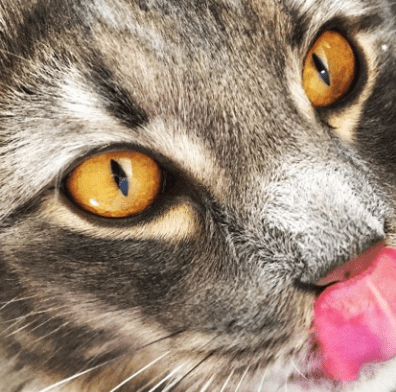
This perceived level of anonymity tends to bring comfort, but is it real and if it is, at what cost?
Smith and Watson (2014, p92) posed this best in the form of a question:
“To what extent are the risks of public disclosure balanced by the new possibilities of self-exploration and self-expression for generations of users who were formerly inhibited about constructing versions of themselves and making enduring multimedia portraits?”
Thus, having an online identity that promotes engagement is important as this brings with it learning and growth, and as indicated above requires balance between caution and exploration. Critically reviewing the sites I had engaged with, at first I noticed that they appeared to be more aligned to caution. Being off balance and aligned to more one side than the other results in limited posts, limited audience, which therefore limits learning and growth.
Continuing to look through WordPressTM, FacebookTM, TwitterTM and InstagramTM at the profiles I had created, at what I had or had not posted was surprising.
Breaking the social media platforms down into what was posted, it was apparent that themes were clearly evident and these in turn provide an overarching typography of the identity that is portrayed online.
- FacebookTM – contains my real name, and messages and photos relating to music, art and travel
- InstagramTM – contains a generic handle and photos I have taken of things I like in and around where I live
- TwitterTM – contains a generic handle, profile picture is my cat, and only two posts, one of my cat and the second a GIF that asks the question ‘who am I?’ delivered by Ben Stiller in Zoolander
- WordPressTM – contains a generic handle and photos I have taken of things I like in and around where I live
The themes are, in no particular order, my cat, art, music, movies, plays and travel – this is part of the construction of my ‘online self’.
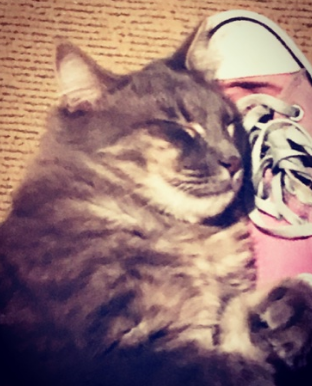
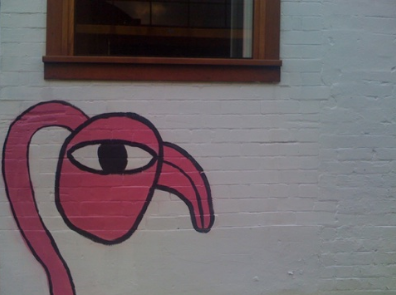
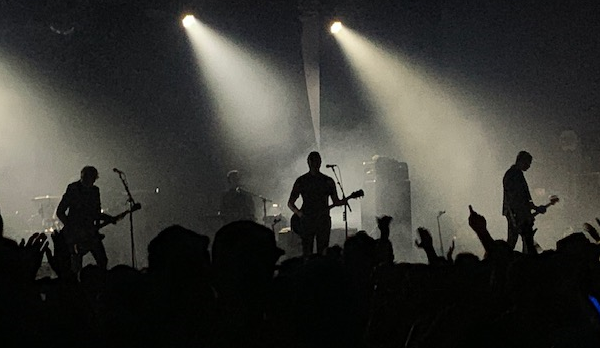

Although in some cases these are more limited than others, for example to look at my TwitterTM profile, member since July 2019, there are only two Tweets, I kid you not, see for yourself @RedLetterbox129
Poletti and Rak’s (2014, p6) statement aligns to the crux of the statement raised by Smith in Watson, being:
“we argue that when it comes to analysing the effect of self-representational media our analysis must remain attentive to the self as an effect of representation – the affordances, strategies, techniques and intended audiences – rather than one’s identity being expressed through online practices.”
If this is the case, simply reviewing online practices is not enough, a broader lens must be applied. To review ‘affordances, strategies, techniques and intended audiences’ is also important and the decisions made to why I only posted particular photos, the way I tried to maintain a level of anonymity and restricting the audience through non-inclusion, also contributed to the direction and make of my online identity.
Further, as has been argued above online identity is more than just what we post, it is where we choose to post it, the methods we employ relating to usernames, avatars, and biographical statements, or in my case, the lack of these. It is all of these things combined, and none of these things. The ability to edit, change and remove items over time allows for the constant evolution and manipulation of ones online identity as identified by Smith and Watson (2014, p. 82)
“In the expanding array of virtual environments, identities become increasingly manipulable.”
That I have an online identity was a new concept to me, while what I posted and where I posted also contributed to this construct was something I had previously not considered. While the foot print may be small it is in deniable and it is mine. Where I choose to take it is a conversation for another day.
References:
Smith, S and Watson, J 2014, ‘Virtually Me: A Toolbox about Online Self-Presentation’, in Poletti, A and Rak, J (eds.), Identity Technologies: Constructing the Self Online, The University of Wisconsin Press, Madison, pp. 70-95
Poletti, A and Rak, J 2014, ‘Introduction: Digital Dialogues’, in Poletti, A and Rak, J (eds.), Identity Technologies: Constructing the Self Online, The University of Wisconsin Press, Madison, pp. 3-11
Images
All images have been taken by Sarah Mackay unless otherwise referenced
Follow My Blog
Get new content delivered directly to your inbox.
 Red Letterbox 129